Urban Leap Programme Learning to Enable Access to Private Finance for Urban Infrastructure

Format
In-Person
Programme Fee
₹30,000 + GST (For Phase 1)
Early Bird Discount
10% Till 31 May
Programme Dates
28 – 30 June 2026
Final Application Deadline
15th June 2026
Venue
ISPP Campus, Hauz Khas, New Delhi

A Two-Phase Workshop Structure

The programme is designed to take participants from foundational learning to applied, city-level project development — in two focused phases.

Programme Flow at a Glance

Phase 1 · 3 Days
← 2 Wk Gap →
Phase 2 · 3 Days
Mandatory for all Data collection Optional deep-dive
Workshop Phases
Phase 1 · Mandatory

Classroom Inputs & Group Exercises

3 Days (30,000 +GST)

  • 3 full days of classroom learning and collaborative group exercises
  • Participants identify one project they wish to pursue in their city
  • Guided process to pinpoint the data needed to develop the project further
2 Weeks
Phase 2 · Optional

Project Development Deep-Dive

3 Additional Days (30,000 +GST)

  • Held after a 2-week gap, giving time for data collection in the field
  • Participants return with real data gathered from their cities
  • Facilitated sessions to develop city projects more fully using collected data
2-Week Data Collection Window Between Phases

After Phase 1, participants return to their cities to collect the specific data they identified during the classroom sessions. This field-gathered data becomes the core material for Phase 2 project development work.

Faculty

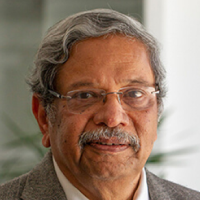
Dr. O.P. Agarwal

Dr. O.P. Agarwal

Former Joint Secretary (Training; Urban Transport)
  • Served in the Indian Administrative Service for nearly three decades, including senior roles in the Government of India and Assam, with experience across transport, power, industries, higher education, and civil service training.
  • Principal author of India’s National Urban Transport Policy, 2006, which continues to guide urban transport planning and investment in India.
  • Worked as Global Urban Transport Adviser at the World Bank in Washington DC, and has held leadership roles at the Indian School of Business and World Resources Institute.
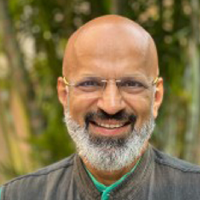
Luis Miranda

Luis Miranda

Former Chairperson (IDFC Private Equity)
  • Played a key role in setting up HDFC Bank and IDFC Private Equity, and currently advises and serves on boards across finance, insurance, and technology sectors.
  • Chairs the Centre for Civil Society and CORO, serves on the boards of Educate Girls and SBI Foundation, and holds senior leadership roles as Chairman of ManipalCigna Health Insurance, Senior Advisor at Morgan Stanley, and board member of L&T Technology Services.
  • Co-founded Take Charge, mentors young leaders, teaches at Chicago Booth’s Accelerated Development Program, and writes for platforms such as Forbes and Thrive Global.
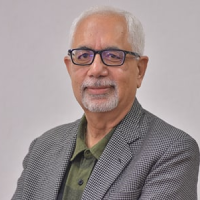
Rajiv Dutt

Rajiv Dutt

Former Managing Director, Indian Railway Finance Corporation
  • Brings over four decades of experience across core infrastructure sectors, including Railways, Power, and Urban Transport, with strong exposure to both policy formulation and on-ground execution.
  • Served as Managing Director of the Indian Railway Finance Corporation from 2011 to 2016, bringing deep expertise in infrastructure financing, public sector finance, and institutional management.
  • Has worked extensively in the social infrastructure sector, including a key role at the Employees State Insurance Corporation
What the Workshop Covers
Basics of Financing Infrastructure Types, sources and mechanisms of urban infrastructure finance
Basics of PPP Public-Private Partnership models and how they work in practice
Risk Analysis & Allocation Identifying, assessing and distributing risk across stakeholders
Project Appraisal Methods Evaluating viability, returns and feasibility of urban projects

Exclusively Tailored For

  • Officers from State Urban Development Departments

  • Municipal Commissioners and city level officials

  • Urban local body finance, planning and engineering officials

  • Consultants involved in preparing urban infrastructure proposals

Certificate of Completion

Jointly Issued by ISPP & Janaagraha

Earn a recognised Certification upon completing the programme

Awarded jointly by ISPP and Janaagraha
Grants access to ISPP alumni network and future events

Programme Learning Outcomes

  • The different types of finance that can be used for urban infrastructure projects

  • The key difference between the different types of finance

  • The sources of each type of finance and which is best used in which situation

  • Mechanisms to access these funds and apply them meaningfully

Register for the Programme
ISPP Centre for Urban Transitions

ISPP Centre for Urban Transitions

ICUT · Research & Capacity Building

The ISPP Centre for Urban Transitions (ICUT) undertakes cutting-edge research to generate new approaches for city planning and management, bridging the gap between outdated frameworks and India’s contemporary urban realities. Beyond research, ICUT also develops uniquely designed capacity-building programs aimed at professionals and institutions across both government agencies and the private sector. These programs focus not just on episodic planning, but on equipping leaders with the daily management capabilities required to keep cities dynamic, resilient, and inclusive.
Janaagraha

Janaagraha

Bengaluru · Urban Policy & Governance

Janaagraha is a Bengaluru-based not-for-profit institution working to transform the quality of life in India’s cities and towns. It defines quality of life as comprising quality of infrastructure and services, and quality of citizenship. To achieve its mission, Janaagraha works with councillors and citizens to catalyse active citizenship in city neighbourhoods, and with governments to institute reforms to city-systems. Janaagraha has worked extensively on urban policy and governance reforms for over two decades, including on JNNURM, and with the XIII, XIV, XV Finance Commissions, and the Comptroller and Auditor General of India. Janaagraha's current portfolio of work includes engagements with the XVI Finance Commission, Ministry of Housing and Urban Affairs, NITI Aayog, Capacity Building Commission, state governments of Odisha, Assam, and Uttar Pradesh, and the 5th State Finance Commission of Karnataka.

Frequently Asked Questions (FAQs)

Is there an age limit for applying for the workshop?

There is no minimum age limit for applying for the workshop. We encourage everyone interested in the subject who wants to pursue a part-time programme to apply.

What is the minimum eligibility required for this programme?

The programme is catered for policy professionals with no minimum specific eligibility criteria.

Ready to Secure Your Spot?

Applications are limited. Apply before 31st May to avail your 10% early bird discount

Early Bird Discount 31 May 2026
Final Application Deadline 15 June 2026
Programme Dates 28 – 30 June 2026
Submit Application